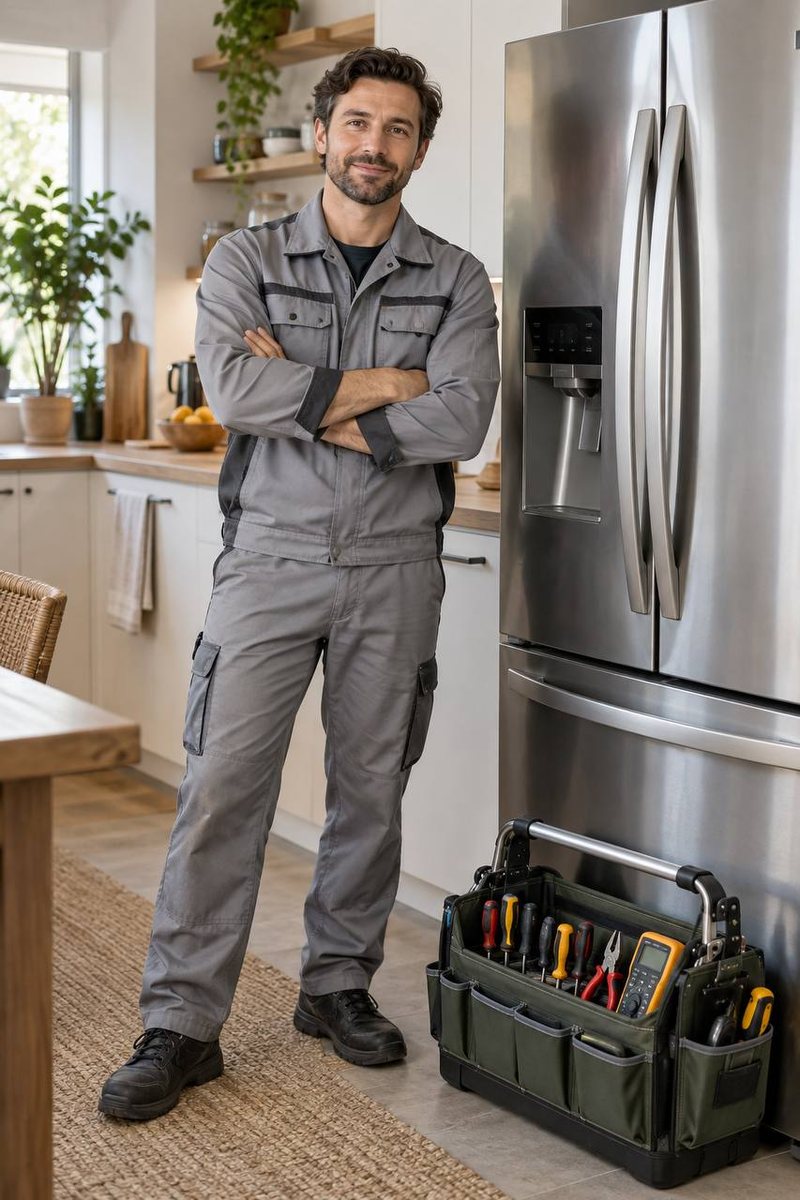
Refrigerator repair from the peninsula to the outer bridges
Our shop sits on Laurens Street in Ansonborough, a few blocks from the Cooper River, and every refrigerator route starts there. South of Broad and the French Quarter are a short drive down East Bay; Wagener Terrace and Hampton Park are a few minutes up Meeting Street. The Ravenel Bridge puts Mount Pleasant ten minutes out, the Crosstown carries the van to West Ashley, the Connector reaches James Island, and I-26 and I-526 take care of North Charleston, Hanahan and Daniel Island. Sullivan’s Island, Isle of Palms, Folly Beach, Johns Island, Goose Creek and Summerville round out the map. Nothing on it carries a bridge or island charge.
Heat is the enemy of a Lowcountry refrigerator. From June into September a garage unit on Johns Island or a carriage-house fridge in Harleston Village runs its compressor almost without pause, and the condenser coils, already packed with dog hair and pollen, cannot shed the load. A typical August call: the freezer still makes ice but the fresh-food side has crept to fifty degrees, and there is a soft clicking every few minutes from the back. That is usually a start relay or a stalled condenser fan, not a dead compressor, and the meter settles the question in a few minutes at the door.
Refrigerator failures we see around Charleston
- Fresh-food side warm, freezer still cold
- Clicking from the back every few minutes
- Frost building on the back wall
- Water pooling under the crisper drawers
- Runs constantly and never cycles off
- Ice cream soft, milk turning early
- Loud hum or rattle from the compressor
- Door gasket torn, sweating on the frame
What the symptom usually means
Warm fridge, freezer fine
Nine times out of ten this is airflow, not refrigerant. The evaporator fan that pushes cold air from the freezer into the fresh-food side has stalled, or the defrost system has failed and a block of ice is smothering the coil. We meter the fan motor and the defrost heater, thermostat and board, then replace the one that failed.
Clicking every few minutes
The start relay on the side of the compressor tries to start it, fails and trips the overload. On a Lowcountry summer afternoon the compressor windings run hot enough that a weak relay gives up first. We test the relay and the windings; a relay is a same-visit repair, and the meter tells us whether the compressor is still sound.
Frost on the back wall
A frost-covered evaporator panel means the defrost cycle is not running. The heater has opened, the defrost thermostat has failed, or the control board is no longer calling for defrost. We check each with the meter, clear the ice so the coil can breathe again and replace the failed component so the frost does not return.
Water under the crispers
The defrost drain line has clogged with food debris or frozen shut, so meltwater backs up and spills into the cabinet. We clear the drain, warm it through and check the drain pan and heater loop. On built-in units in older peninsula kitchens we also look at the door gaskets, which sweat and drip in humid weather.
Runs constantly, never satisfied
Condenser coils packed with pet hair, a condenser fan that has seized in salt air, or a torn gasket letting humid room air in all day. The compressor is doing its job but cannot get rid of the heat. We clean and meter the condenser side, replace a failed fan motor and check gasket seal with the door closed.
Dead after an outage or surge
Hurricane-season flickers take out control boards and inverter compressor drives, and a flooded ground floor can leave a fridge sitting in salt water. We test incoming power, the main board and the inverter before condemning anything expensive, and we tell you plainly if the machine took water and what that means.
How a refrigerator repair visit runs
The technician arrives inside the window we gave you, texts first and comes in with a meter and a thermometer rather than a hunch. Coil temperatures, fan currents, compressor amperage and board voltages get checked in order, and the failed part is named in plain words before any number is written. If the van carries the part, and for the common failures it does, the repair happens right then. If a part has to be ordered, we set the return date on the spot and there is no second trip fee. Every repair ends with a full cooling cycle, the shelves back in, the floor wiped and a written warranty in your hand.
We work on Sub-Zero, Thermador, Viking, Miele, JennAir, Bosch, KitchenAid, GE Café and Monogram, Samsung, LG, Whirlpool, Maytag, Frigidaire, Electrolux, Kenmore and Fisher & Paykel, including panel-front and built-in units South of Broad and on Daniel Island and the French-door builder packages in Mount Pleasant and Summerville. Guest houses, short-term rentals and property managers get turnover-day windows, lockbox and gate-code access, approval by text and the invoice by email. The $99 diagnostic is inside the number you approve; say no and $99 is the whole bill. All pricing comes after the diagnostic, in writing.
Refrigerator & Freezer Repair questions from Charleston & the Lowcountry
How fast can you get to a warm refrigerator in Charleston?
Cooling failures get first claim on the schedule. Call before noon and a same-day window is usual on the peninsula, in Mount Pleasant, West Ashley and James Island, and often next day for the farther bridges. Move the perishables to a cooler with ice in the meantime and keep the doors closed as much as you can.
Is it worth repairing a fridge that is ten years old?
Often, yes. A fan motor, relay, defrost heater or board on a ten-year-old Whirlpool or KitchenAid is a reasonable repair and the rest of the machine has years left. A sealed-system leak or a failed compressor on a builder-grade unit is where we talk it through with you. The diagnostic tells us which one you have.
Do you service built-in and panel-front refrigerators on the Charleston peninsula?
Yes. Sub-Zero, Thermador, Miele, JennAir and Monogram built-ins are routine for us in Ansonborough, South of Broad and Harleston Village. We know how the panels come off and go back on without marking the cabinetry, and the van carries the fan motors and relays those units most often need.
My refrigerator is in the garage and stopped cooling in July. Why?
Garage and carriage-house units work hardest in the Lowcountry summer. Ambient heat over ninety degrees, a coil full of dust and a fan slowed by corrosion push the compressor past what it can shed, and the weakest component fails first. We restore the airflow and replace what quit; often the machine is sound underneath.
What does the $99 diagnostic cover?
A technician at your door with a meter, a thermometer and time to find the actual fault. You get the failed part named in plain words and one written number for the repair. Approve it and the $99 is already inside that number. Decline it and $99 is the whole bill, with no pressure either way.