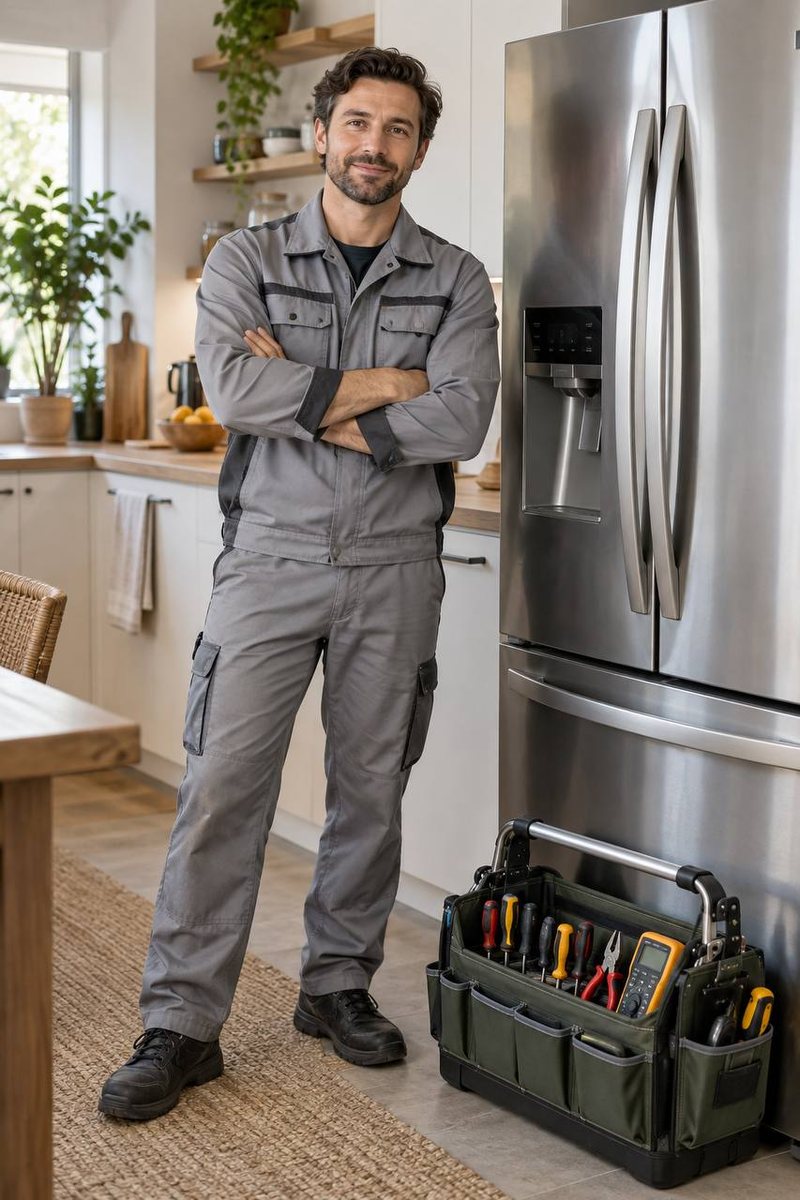
Ice makers on James Island, upstairs and in the garage
Summer on James Island is the season for empty ice bins. The kitchen refrigerator in a Harbor View house is working hard enough in August, and the second one in the garage under a raised house on Fort Johnson Rd is working harder, in air that is hot, wet and faintly salty. An ice maker only cycles when its freezer is cold enough, so the first ice maker to quit on the island every June is the one in the garage, and it usually quits because the freezer has crept above the temperature the module needs, not because the module has failed. From Laurens St the trip over the Connector takes about twelve minutes.
The water is not the problem here. James Island is on Charleston Water System, which runs moderately soft, so the crusted fill valves and scaled trays that plague Berkeley County are rare. What fails instead is the mechanical and electrical side: a module motor that has stalled, a fill valve that dribbles after closing and freezes the tube, a door-duct heater on a French-door unit that has burned out. A call we hear most weeks from Riverland Terrace and Camp Rd: the cubes have gotten smaller and more hollow over a month, and now there are none. That is a fill problem, and it is traced back along the line to its source.
Common ice maker failures on James Island
- Bin empty for days
- Cubes thin, hollow or cloudy
- Fill tube packed with ice
- Cubes frozen into one slab
- Water leaking into the bin
- Ice tastes stale or off
- Module hums but never harvests
- Door ice maker iced shut
What the symptom usually means
Empty bin
The freezer is running too warm to trigger a cycle, the module has failed, the fill valve is not opening, or the line is pinched or frozen. Freezer temperature is checked first, then the module is forced through a harvest and the valve metered. One of those four turns up nearly every time.
Thin or hollow cubes
Not enough water per fill. A fill tube partly frozen, an inlet valve weakening with age, a kinked line behind the refrigerator, or a saddle valve under the sink that has closed itself down. We measure the volume reaching the tray and follow the line back to where it drops.
Frozen fill tube
The valve is leaking past its seat after it closes, or the fill-tube heater on a door ice maker has failed, so water freezes before it reaches the tray. We thaw the tube, meter the valve for leak-through, and replace the valve or heater so it does not happen again.
Slab in the bin
The freezer ran warm during a heat wave or a storm outage and the cubes fused, or the bail arm and shutoff are not stopping production so the bin overfills and partly thaws. We empty the bin, check the freezer temperature and test the shutoff switch.
Water in the bin
A fill valve that will not seal, a cracked ice tray, or a fill cup knocked out of alignment so water misses the mold. A door-mounted unit adds the duct gasket to the list of suspects. We run a fill cycle with the bin out and watch where the water goes.
Stale or off-taste ice
A water filter past its date, something uncovered in the freezer, or ice that has sat for weeks absorbing odors. We replace the filter if it is due, dump the bin, and confirm the door gaskets are sealing so warm humid air stays out of the freezer.
How ice maker repair works on James Island
A thermometer in the freezer comes first, because a module in a compartment sitting at 18 degrees will not cycle no matter what is replaced. Next the technician triggers a harvest by hand and meters the module motor, mold heater and bail switch as it runs. The fill valve is tested for opening cleanly and closing completely. The line is followed from the module to the sink valve looking for kinks and pinches. On a door-mounted unit the duct, its gasket and the fill-tube heater are inspected as well. You get the failed part named plainly and one written price, and most of these repairs finish the same visit from the van.
Whirlpool, Maytag, GE, Frigidaire and Kenmore modules in the older Riverland Terrace and Folly Rd houses, and Samsung, LG, GE Café, KitchenAid and Sub-Zero systems in the newer kitchens along Harbor View Rd and off Maybank Hwy, are all familiar work. We service only the ice makers built into refrigerators, never standalone or under-counter machines. If the refrigerator itself is the reason the ice stopped, that gets diagnosed on the same visit under the same $99. The rule for every James Island ice maker call: the diagnostic is inside the repair price you approve, a declined repair costs $99 alone, and every repair price is written after the diagnostic.
Ice Maker Repair questions from James Island
Why did the ice maker in my James Island garage fridge quit in June?
Because the garage got hot. A refrigerator under a raised house in summer struggles to hold the freezer near zero, and an ice maker will not cycle in a freezer that is running warm. We check the compartment temperature and the condenser before touching the module, since the fix is often on the cooling side.
Do you repair the door ice maker on French-door refrigerators on James Island?
Yes. Door-mounted ice makers on Samsung, LG, Whirlpool and GE French-door units are among our most common island calls, especially in the Harbor View and Maybank Hwy kitchens. The duct, gasket, fill-tube heater and module are the usual failures, and parts for the common models ride on the van.
Is the ice maker diagnosed separately from the refrigerator?
No. The ice maker is part of the refrigerator, and one $99 diagnostic covers the whole machine. If the ice stopped because the freezer is running warm, we tell you that and diagnose the cooling fault on the same visit, with one written price for whatever repair is needed.
My cubes have been getting smaller for weeks. Should I wait until it stops?
Better not to. Shrinking cubes mean the fill is dropping, and the usual cause, a fill tube slowly freezing or a valve weakening, gets worse until the tube is solid or the valve fails open and floods the bin. It is a smaller repair caught early.
Can I replace the ice maker module myself?
On a simple top-freezer unit the module is not hard to reach, and some homeowners do. The trouble is that the module is the failed part less than half the time. A metered diagnosis avoids buying a module when the valve, the tube or the freezer temperature was the real fault.