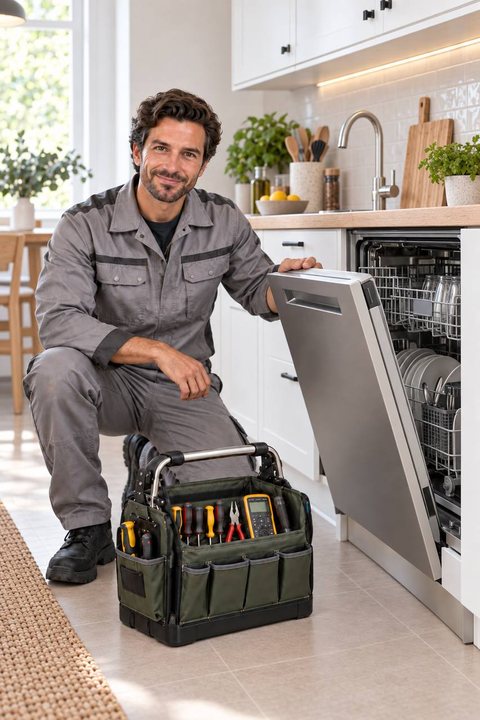
Ranges and ovens in James Island kitchens
Salt air is the James Island ingredient. The harbor side along Fort Johnson Rd and Harbor View Rd, and the Stono side of Riverland Terrace, both sit close enough to open water that the breeze carries salt into the kitchen and onto the spark electrodes, igniters and door switches of a range. A gas cooktop that lights on the first click in a Summerville subdivision may need three or four here after a few years, because the electrode tip has corroded and the spark is weak. The van makes the trip from Laurens St over the Connector in about twelve minutes, and the electrodes and igniters for the common brands ride along.
The kitchens themselves vary more than most places. Along Folly Rd and Camp Rd the ranches from the 1960s and 70s still run coil-top electric ranges that are simple and worth repairing. The raised waterfront houses and the newer builds off Maybank Hwy have slide-in gas ranges, wall ovens and the occasional Wolf or Thermador. A typical call from Harbor View: the oven on a six-burner gas range preheats fine but the temperature drifts twenty degrees either way during a long bake. That is nearly always the oven sensor or a weakening igniter cycling the valve late, and the meter tells us which within minutes.
Common range and oven failures on James Island
- Burner clicks, never catches
- Oven slow to reach temperature
- Coil burner dead on one side
- Oven heats then shuts off
- Bake element flashed and failed
- Convection fan gone silent
- Display dark after a storm
- Faint gas smell at the cooktop
What the symptom usually means
Clicking without a flame
A corroded or cracked spark electrode, food or moisture in the burner base after a boil-over, or a spark module that has lost an output. On the island the electrode is the leading suspect. We clean and test it, then the module, and replace only what has failed.
Slow oven, gas
A weak igniter. It still glows, but its current draw has dropped below the threshold the safety valve needs, so gas arrives late and the oven creeps up. We measure the amperage; if it is under spec, a new igniter fixes both the preheat and the temperature drift.
Dead coil burner
A burned-out element, a receptacle that has corroded in the salt air, or an infinite switch on the panel. We swap a known-good element to isolate the fault, meter the receptacle and the switch, and replace the failed piece rather than the whole set.
Heats, then shuts off
An oven sensor reading high and tripping the control, a cooling fan that has stalled and let the electronics overheat, or a door switch confused by corrosion. We check the sensor resistance, spin the fan and test the switch before writing anything down.
Element flashed and died
The bake or broil element has burned through, which usually shows as a bright spot and a small crater. Occasionally the flash takes a relay on the control board with it. We replace the element and confirm the board is switching properly before calling the job done.
Dark display
Supply voltage lost at the outlet or breaker, a loose ribbon connector behind the panel, or a control board damaged by a summer surge. We confirm voltage and connectors first, so a board is replaced only when the board has actually failed.
How range and oven repair works on James Island
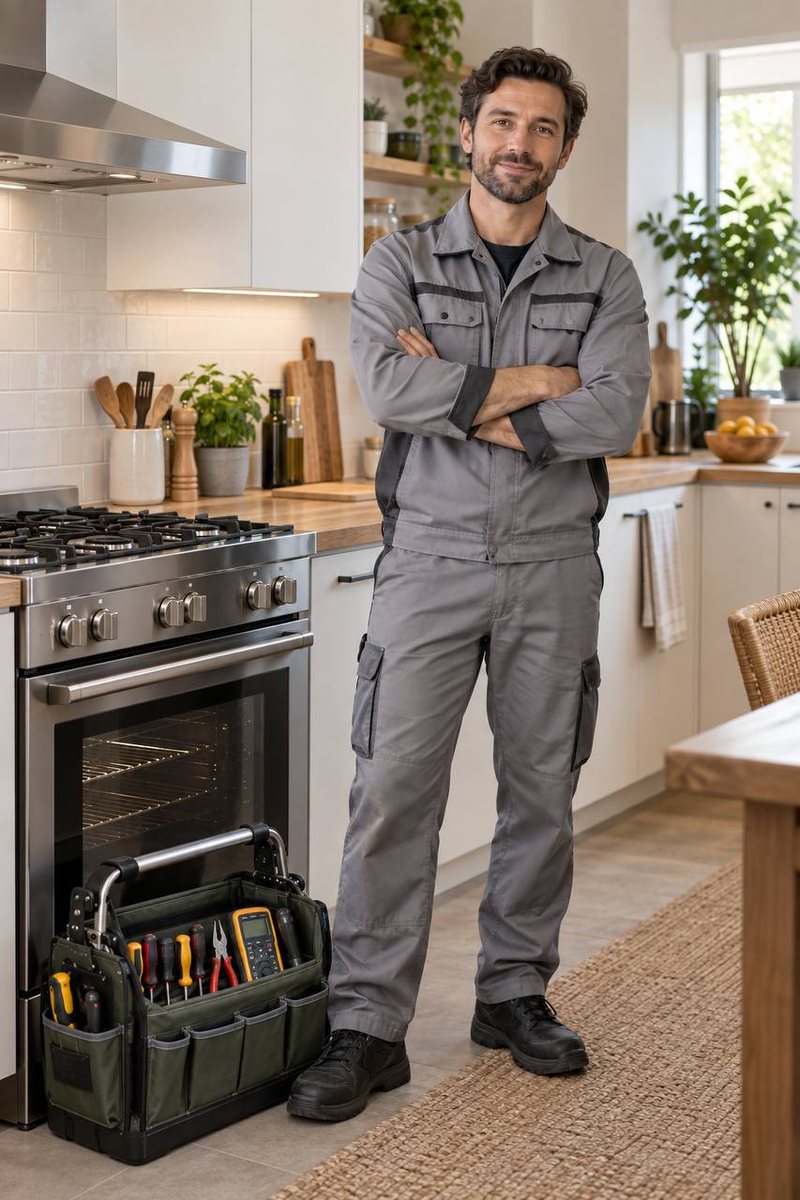
The technician runs every burner and the oven before a single screw comes out, because watching the machine fail tells half the story. Then the meter: igniter amperage on gas, element resistance on electric, oven sensor resistance against the chart, switch continuity, board voltages. Gas ranges get a leak check at the regulator and the flexible connector on every visit. You get the failed part named plainly, a short explanation of why it went, and one repair price in writing. Approve it and the part usually comes off the van the same visit; a part that has to be ordered comes back on a scheduled return at no extra trip charge.
GE, Frigidaire, Whirlpool, Maytag, Kenmore, Samsung and LG cover most of the island's kitchens, with KitchenAid, Bosch, JennAir, Thermador, Wolf and Viking in the waterfront remodels along Harbor View Rd and Fort Johnson Rd. Wall ovens, double ovens and pro-style ranges are ordinary work. For the vacation rentals down Folly Rd we take lockbox codes, approve by text and invoice by email. The pricing rule never varies with the brand or the address: the $99 diagnostic is inside the repair price you approve, a declined repair costs $99 and nothing else, and repair prices are written after the diagnostic.
Stove, Range & Oven Repair questions from James Island
Why does my gas cooktop on James Island take so many clicks to light?
Salt air corrodes the tip of the spark electrode, and a corroded tip throws a weaker spark. Boil-overs that leave moisture in the burner base make it worse. Cleaning helps for a while; a new electrode fixes it. We test the spark module at the same time so nothing gets replaced twice.
Do you repair pro-style ranges in the Harbor View and Fort Johnson houses?
Yes. Wolf, Viking, Thermador and JennAir ranges and wall ovens are regular work for us on James Island. Igniters, spark modules, oven sensors and control boards for those brands are familiar, and we are careful with the stainless and the trim.
My electric oven in Riverland Terrace on James Island bakes unevenly. What is wrong?
Usually a drifting oven sensor, a convection fan that has slowed or stalled, or a bake element with a weak section. Each can be measured, and each is a part-level repair. We tell you in writing which one it is and what the repair will cost before doing anything.
Is a 1960s coil-top range worth repairing?
Often, yes. Those ranges in the older Riverland Terrace and Folly Rd houses are simple, and a coil element, receptacle or infinite switch is a modest repair. The $99 diagnostic names the fault and gives you a written price so you can decide with the real number in hand.
I smell gas near the cooktop. What should I do?
Turn the burner knobs off, open a window, do not light anything, and call. If the smell is strong, leave the house and call the gas utility first. A faint smell at the cooktop is often a burner valve or a loose connector, and we check for leaks at the regulator and connector on every gas visit.